WinCart – Edge AI Smart Shopping Assistant & Indoor Navigation
Top 20 Finalist at IoT Challenge 2025 (FPT Software & Silicon Labs). Real-time BLE indoor positioning with Triplet Metric Learning + KNN, quantized on-device LLM on Raspberry Pi, and A* pathfinding.
An autonomous, AI-powered smart shopping cart navigation and conversational assistance system developed as a Top 20 Finalist in the IoT Challenge 2025, organized by FPT Software and Silicon Labs.
WinCart transforms traditional supermarket shopping into a hands-free, intelligent experience by combining sub-meter BLE indoor positioning, on-cart edge computing with quantized Large Language Models (LLM), and real-time pathfinding across complex multi-aisle retail environments.
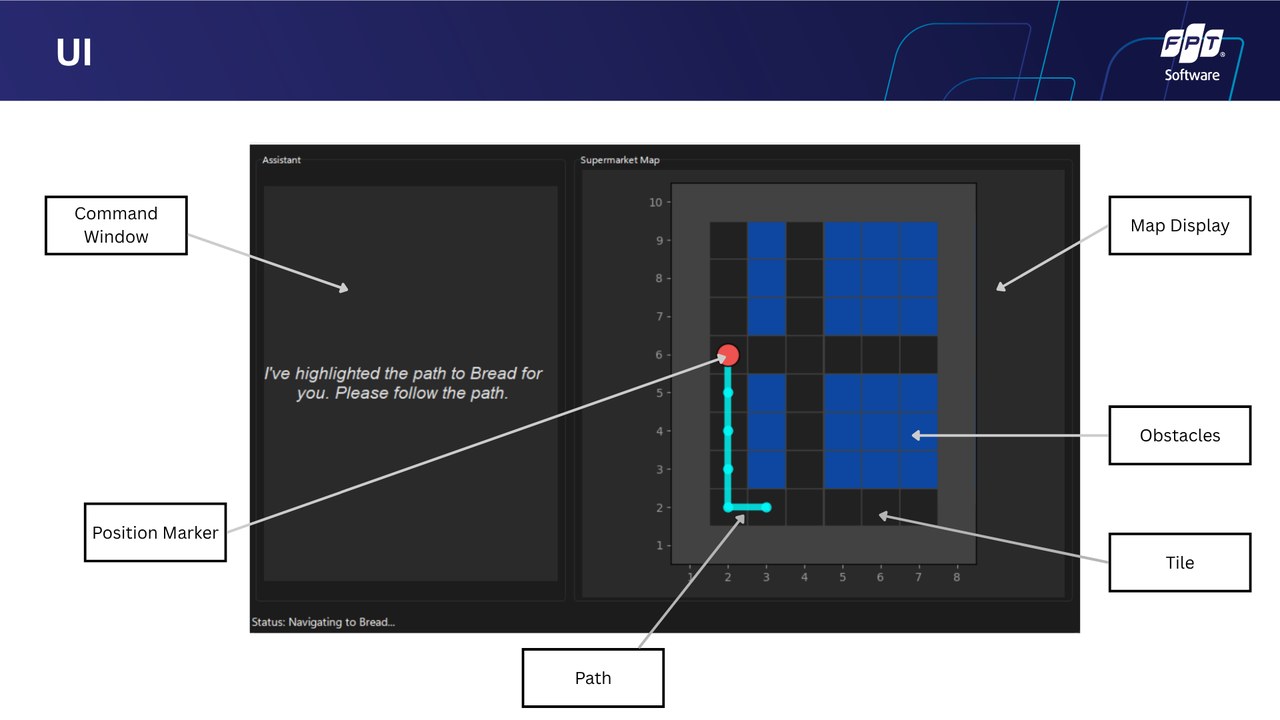
1. The Retail Problem & Market Opportunity
Modern hypermarkets present significant customer friction:
- Shopper Navigation Fatigue: Customers waste an estimated 20–30% of their in-store shopping time searching for items across dense multi-aisle layouts.
- GPS-Denied Indoor Environments: Satellite GPS signals cannot penetrate commercial building structures, necessitating dedicated indoor positioning systems (IPS).
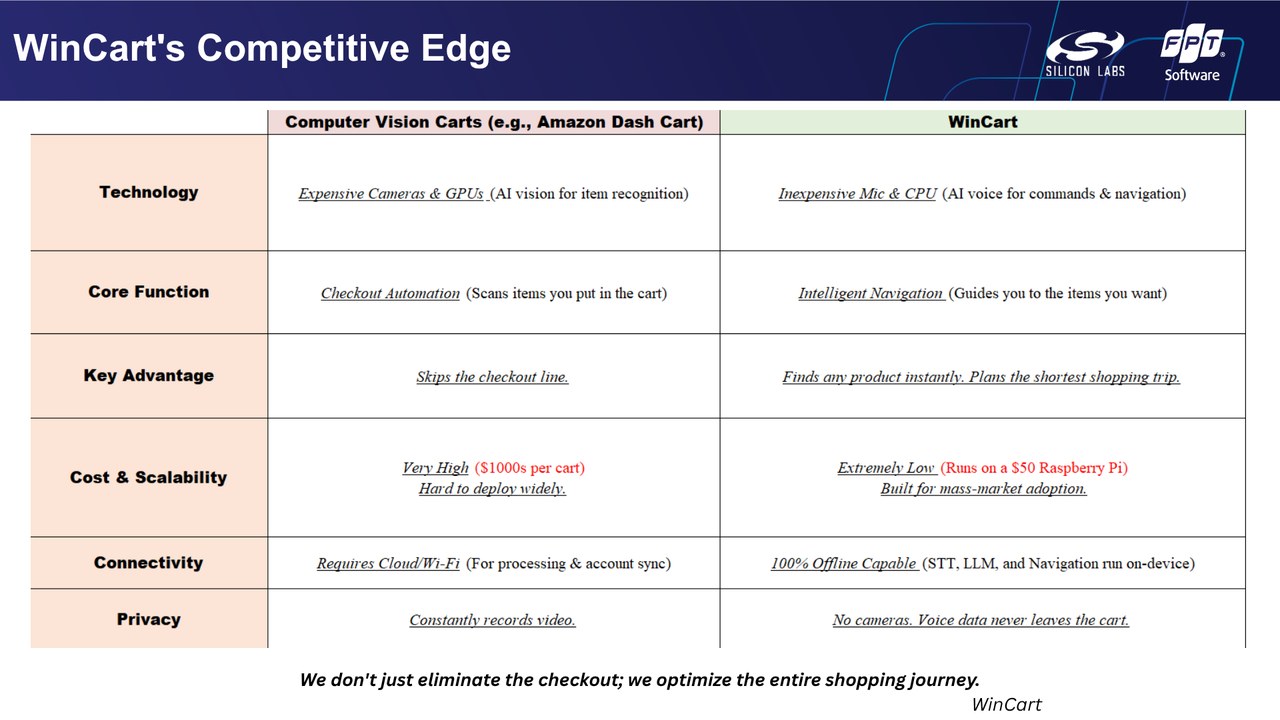
- Existing Cart Complexities: Solutions like Amazon Dash Cart rely on heavy, expensive multi-camera arrays and weight sensors ($5,000+ per cart), making wide deployment economically unviable for Southeast Asian retail markets.
WinCart addresses this with an ultra-cost-effective architecture: low-cost Bluetooth Low Energy (BLE) infrastructure coupled with on-cart edge intelligence.
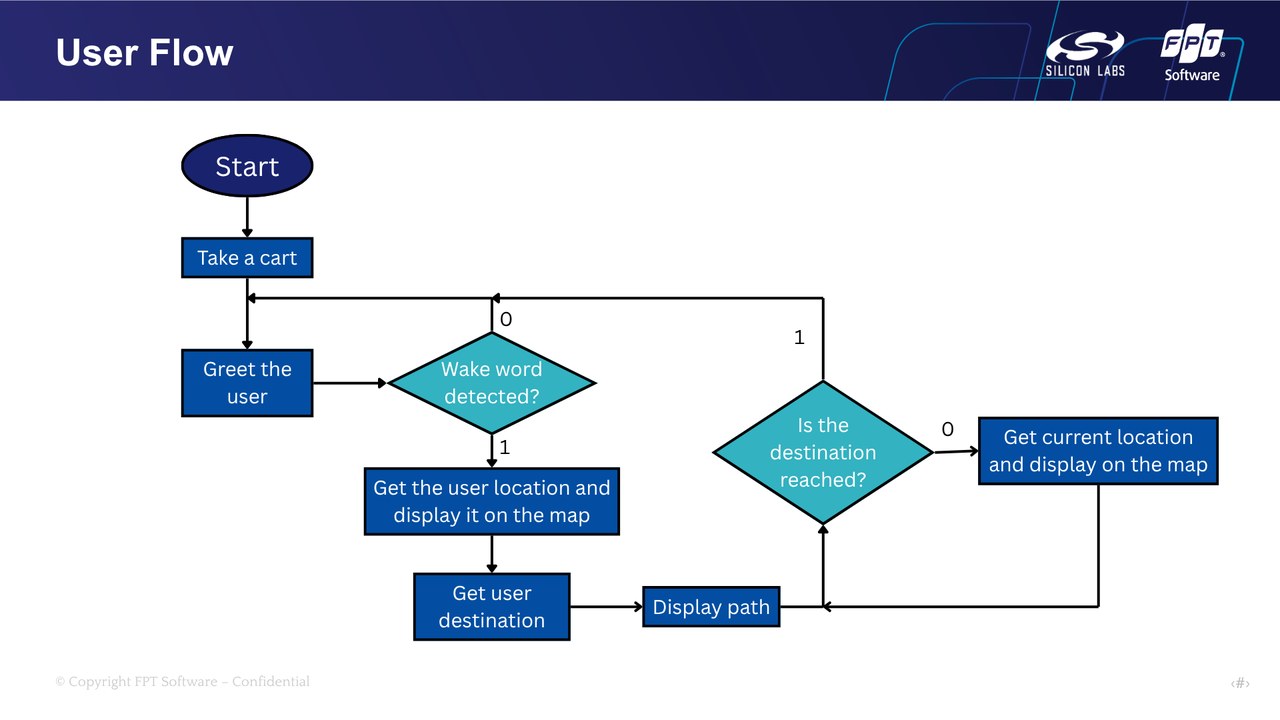
2. System Architecture & Hardware Stack
The WinCart architecture is partitioned into three cooperative layers:
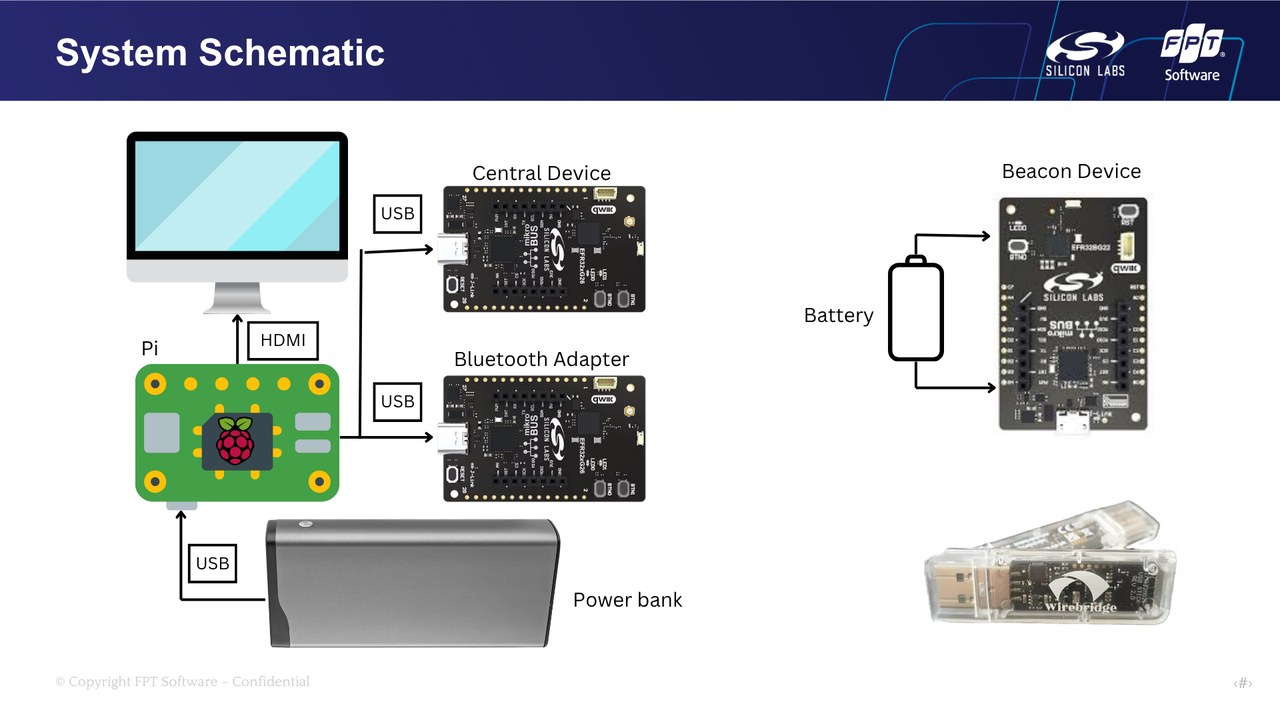
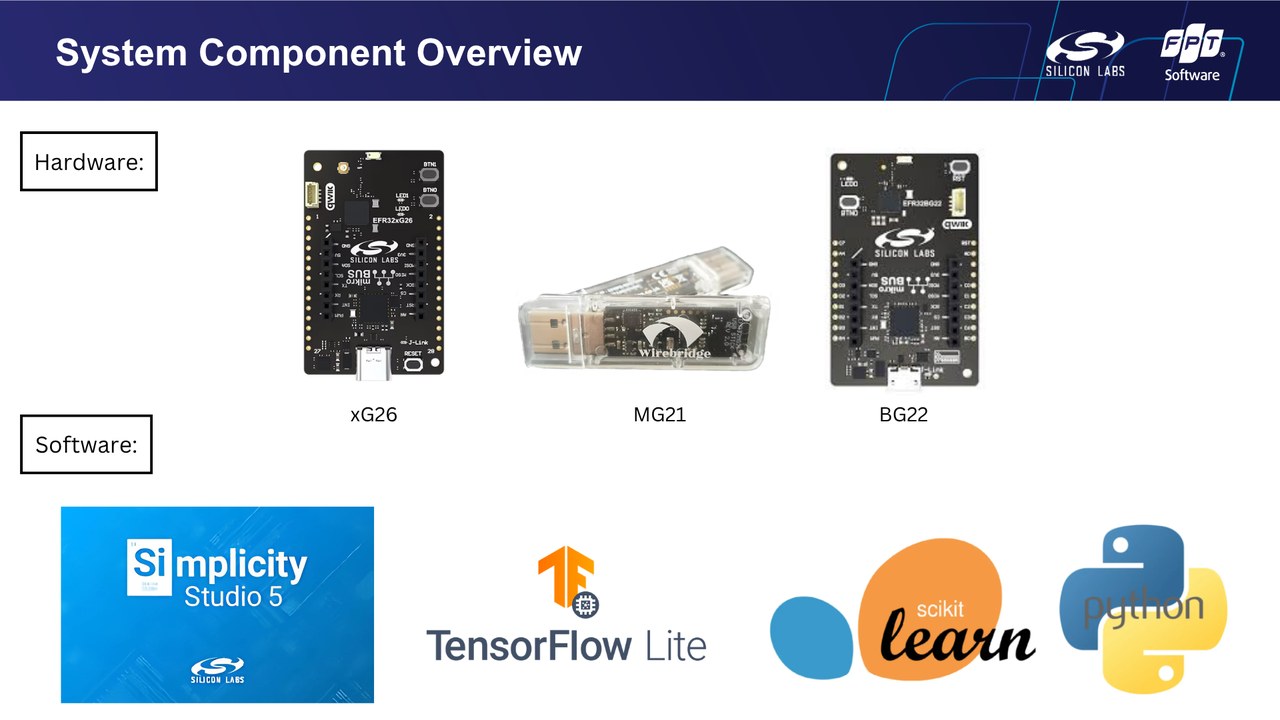
Hardware Subsystems
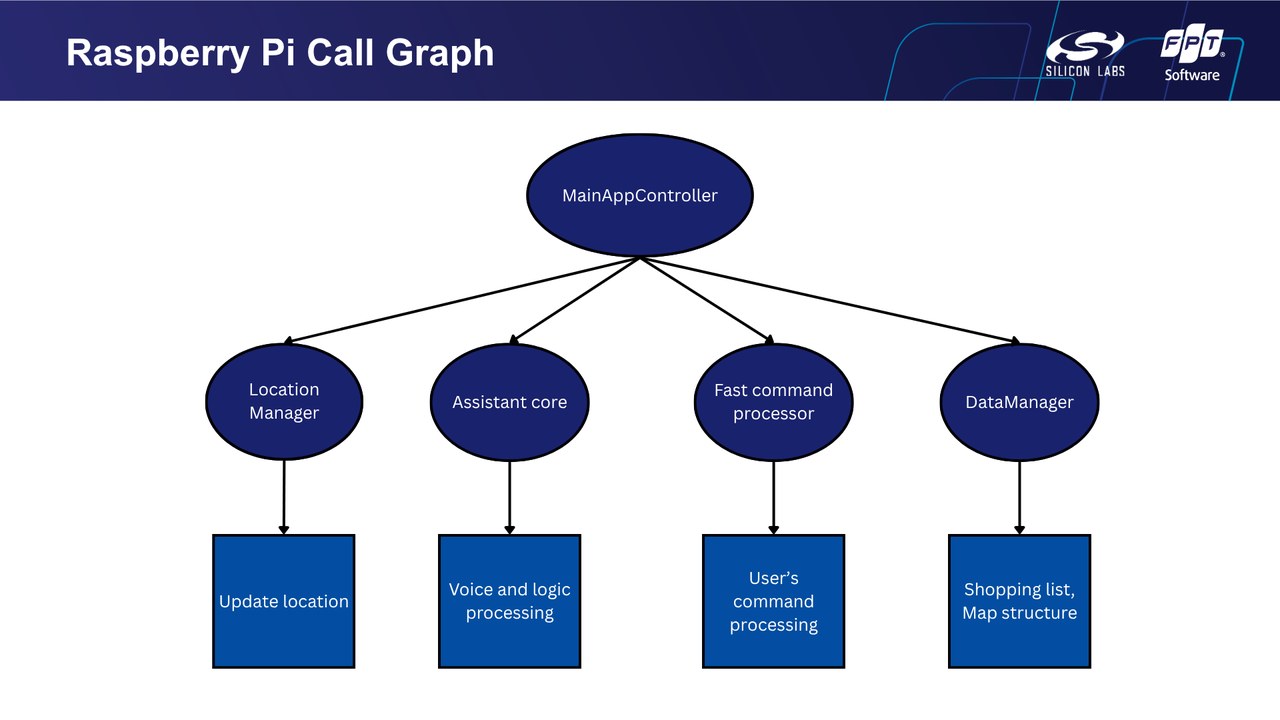
- Central Cart Unit (Raspberry Pi):
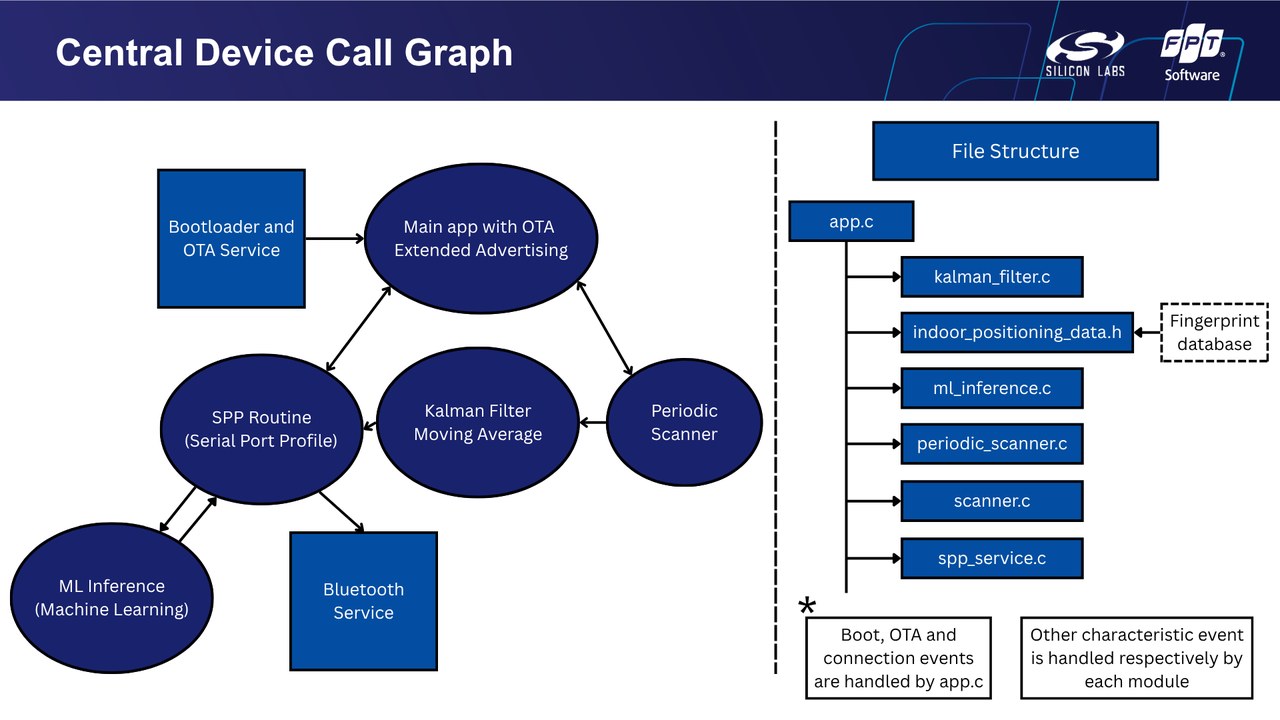
Acts as the cart’s primary computing hub, executing the touchscreen GUI, 3-stage voice processing pipeline, local conversational LLM, and real-time A* pathfinding. - Positioning Subsystem (Silicon Labs EFR32):
A dedicated Silicon Labs EFR32 Wireless Gecko microcontroller mounted on the cart operates as a high-speed central BLE scanner, capturing periodic advertising packets from fixed aisle beacons. - Fixed Shelf Beacons:
Battery-efficient Silicon Labs BLE beacons placed along supermarket shelving emit synchronized periodic advertising packets containing beacon IDs and transmission power metadata.
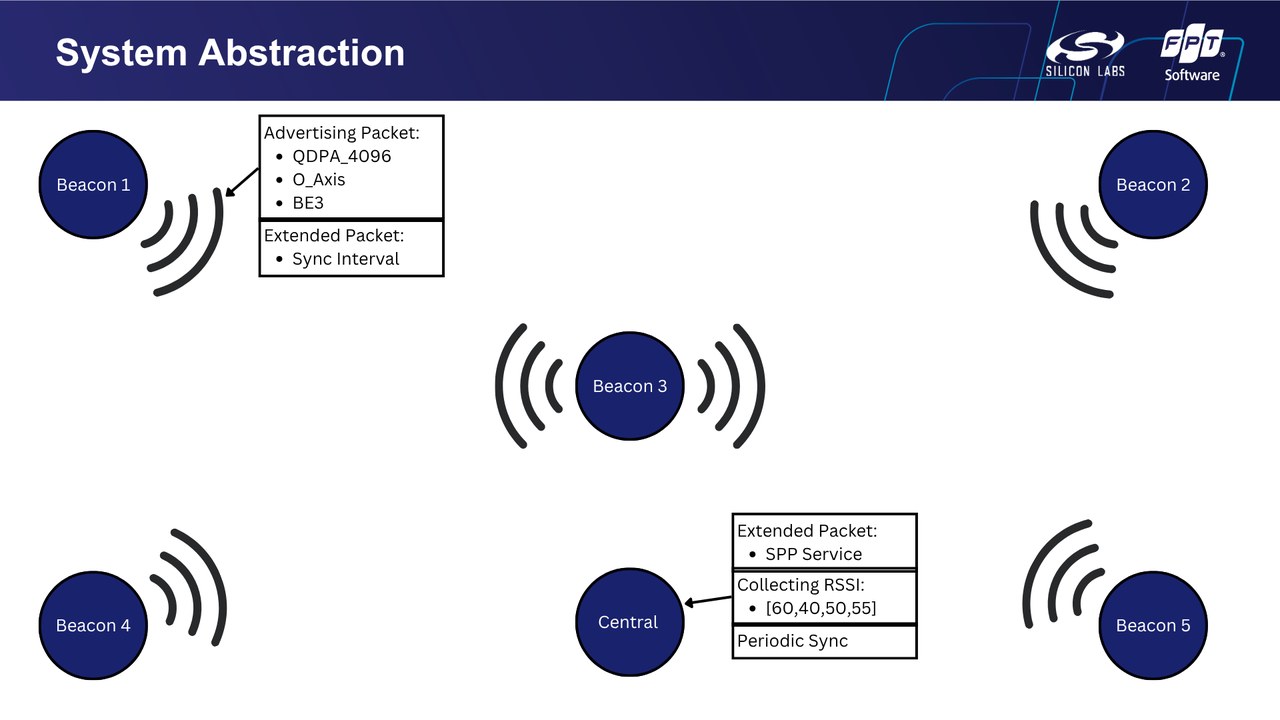
3. Sub-Meter Indoor Positioning via Triplet Metric Learning
Traditional RSSI trilateration fails catastrophically in indoor retail environments due to:
- Severe Multipath Reflections: Metal shelving and refrigeration units create complex constructive/destructive RF interference.
- Human Body Shadowing: Dynamic crowds absorb and scatter 2.4 GHz signals, causing non-linear RSSI fluctuations up to 15 dB.
The Triplet Network + KNN Architecture
Rather than relying on noisy geometric distance formulas, WinCart employs Deep Metric Learning:
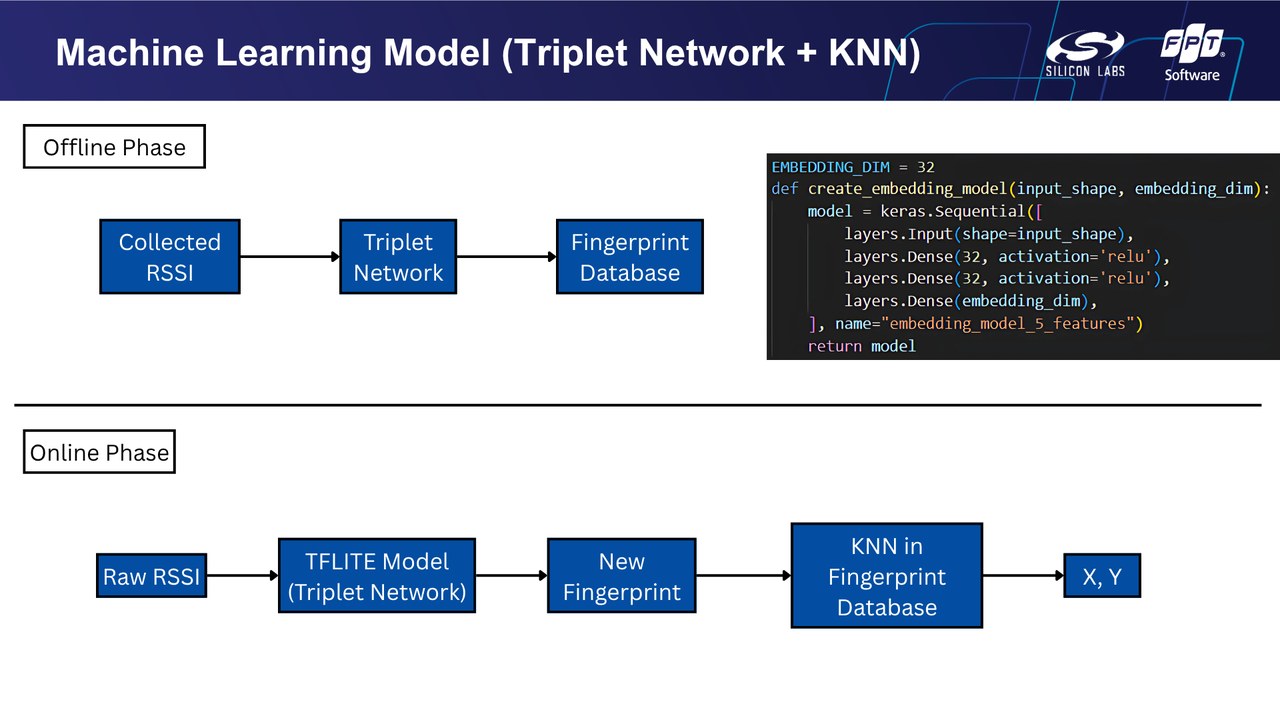
- Offline Training Phase:
A deep neural network (Triplet Network) is trained on multi-beacon RSSI fingerprint vectors using Triplet Margin Loss:
Where a is an anchor fingerprint, p is a positive sample from the same spatial cell, n is a negative sample from a distant cell, and α is the enforcement margin.
- Embedding Space:
The network learns to project noisy high-dimensional RSSI vectors into an invariant low-dimensional embedding space where spatial proximity is preserved regardless of RF multipath distortions. - Online Inference (KNN):
During runtime, incoming RSSI scans from the Silicon Labs receiver are projected into the embedding space, and a K-Nearest Neighbors (KNN) regressor estimates the cart’s precise coordinates with sub-meter accuracy.
4. 3-Stage Voice Pipeline & On-Cart Quantized LLM
To enable natural hands-free interaction, WinCart incorporates a fully local edge voice assistant pipeline:
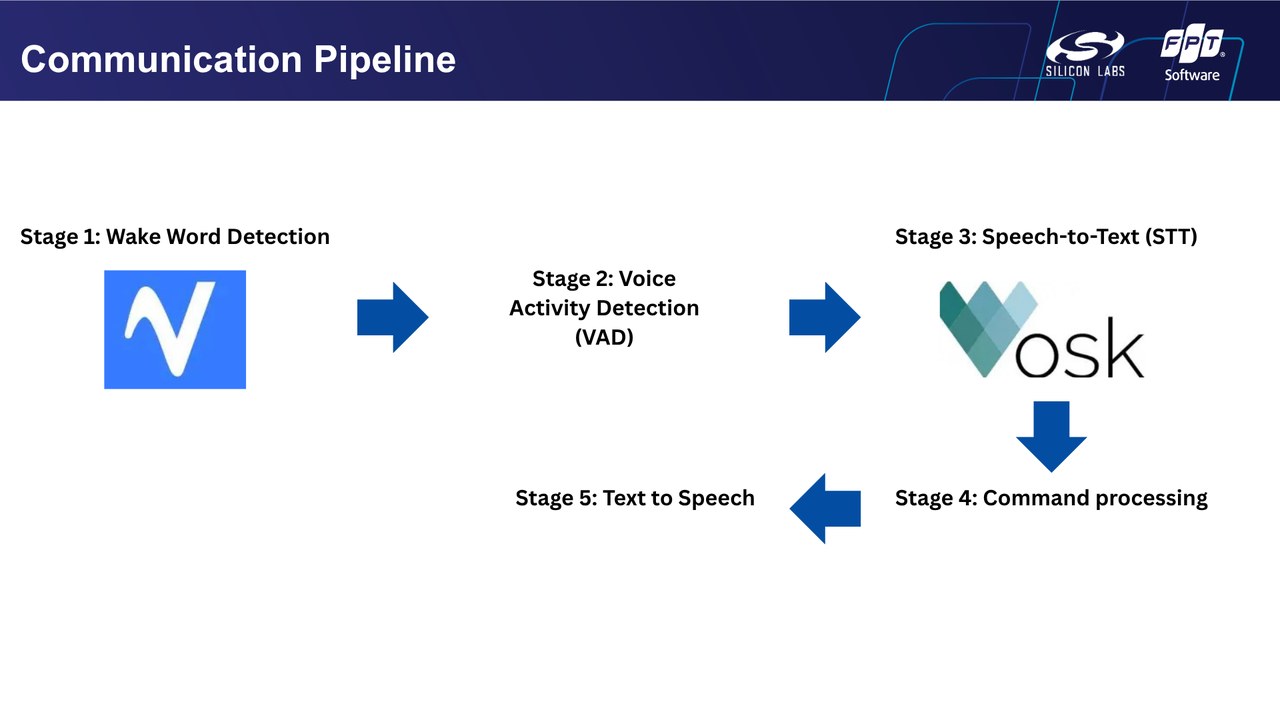
- Stage 1 — Wake Word Detection: Listens continuously with minimal CPU overhead for the activation phrase “Hey WinCart”.
- Stage 2 — Voice Activity Detection (Silero VAD): Trims background supermarket noise and segments speech boundaries with millisecond precision.
- Stage 3 — Speech-to-Text (Whisper STT): Transcribes Vietnamese and English queries into structured text commands.
On-Device Conversational LLM (Qwen2.5 via llama.cpp)
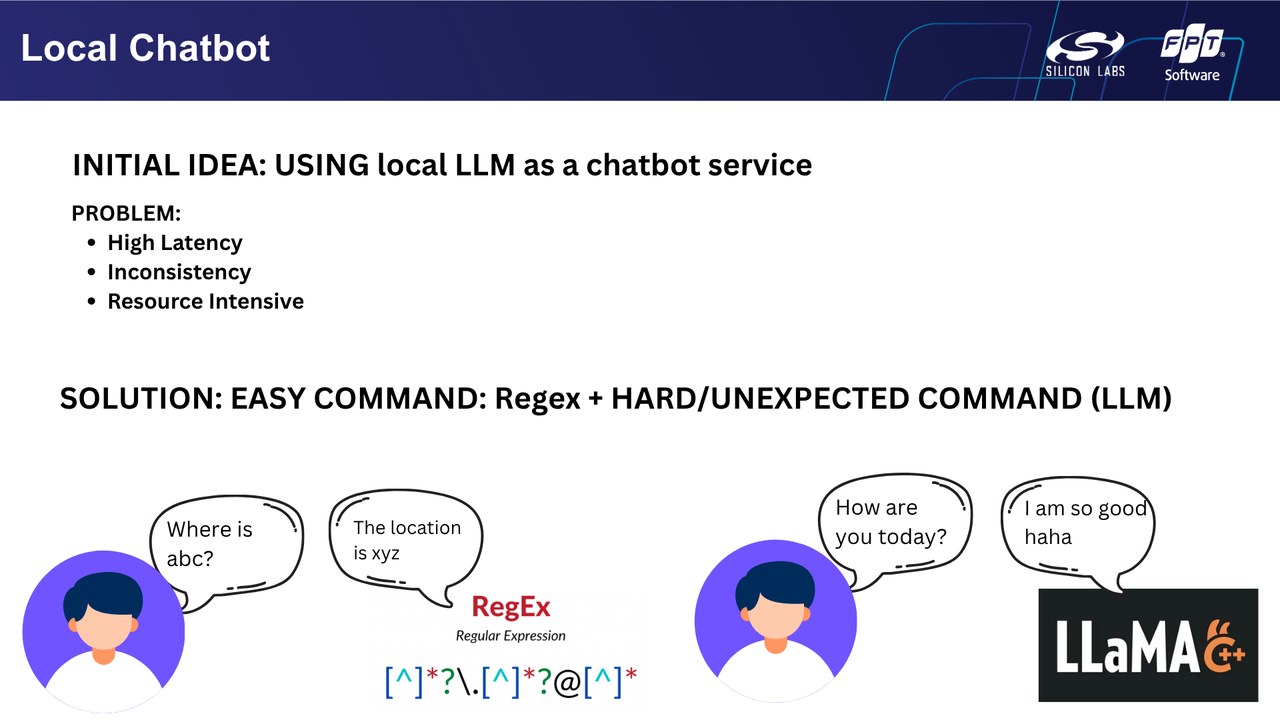
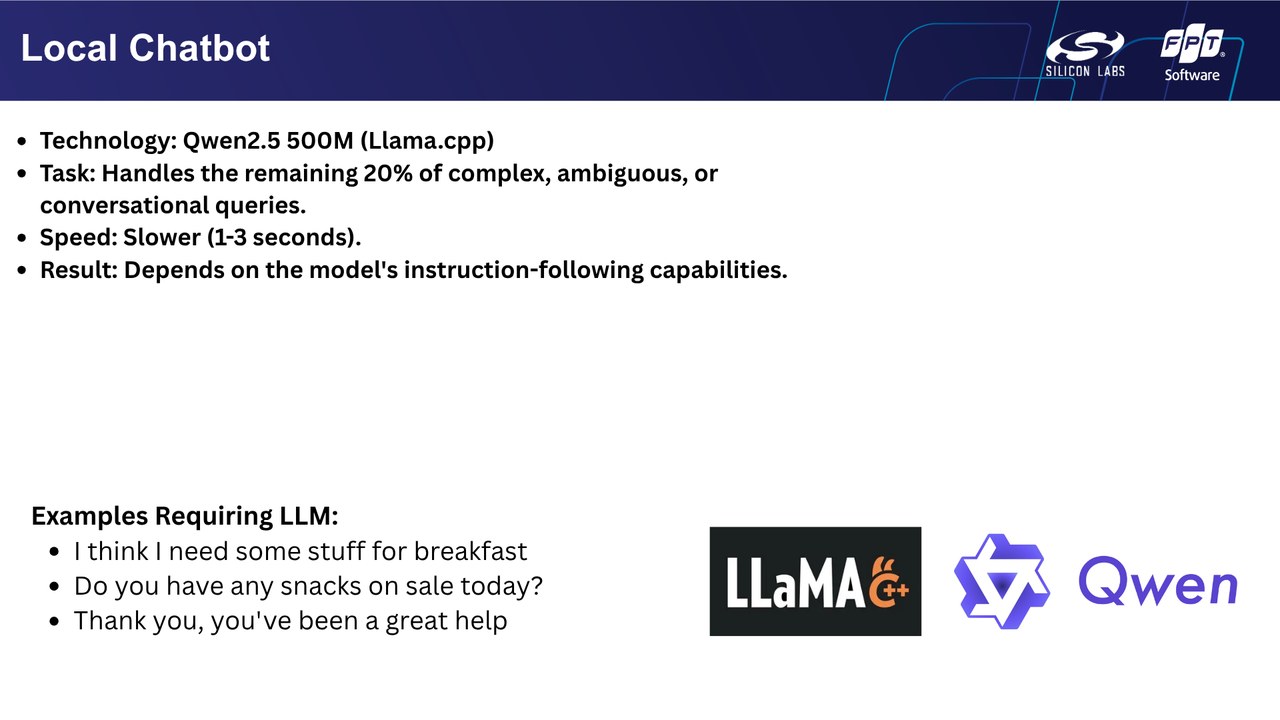
Rather than paying recurring cloud API fees or suffering network drops in underground grocery stores, WinCart runs a localized Qwen2.5-0.5B model quantized in GGUF format via llama.cpp directly on the Raspberry Pi:
- Zero Cloud Latency: Instant response to complex conversational questions (e.g., “Where can I find organic gluten-free pasta on sale today?”).
- Hybrid Intent Parser: A hybrid Regex + LLM pipeline resolves exact item names to database product IDs and passes them to the A* navigation planner.
5. Supermarket Map Editor & Fleet Scalability
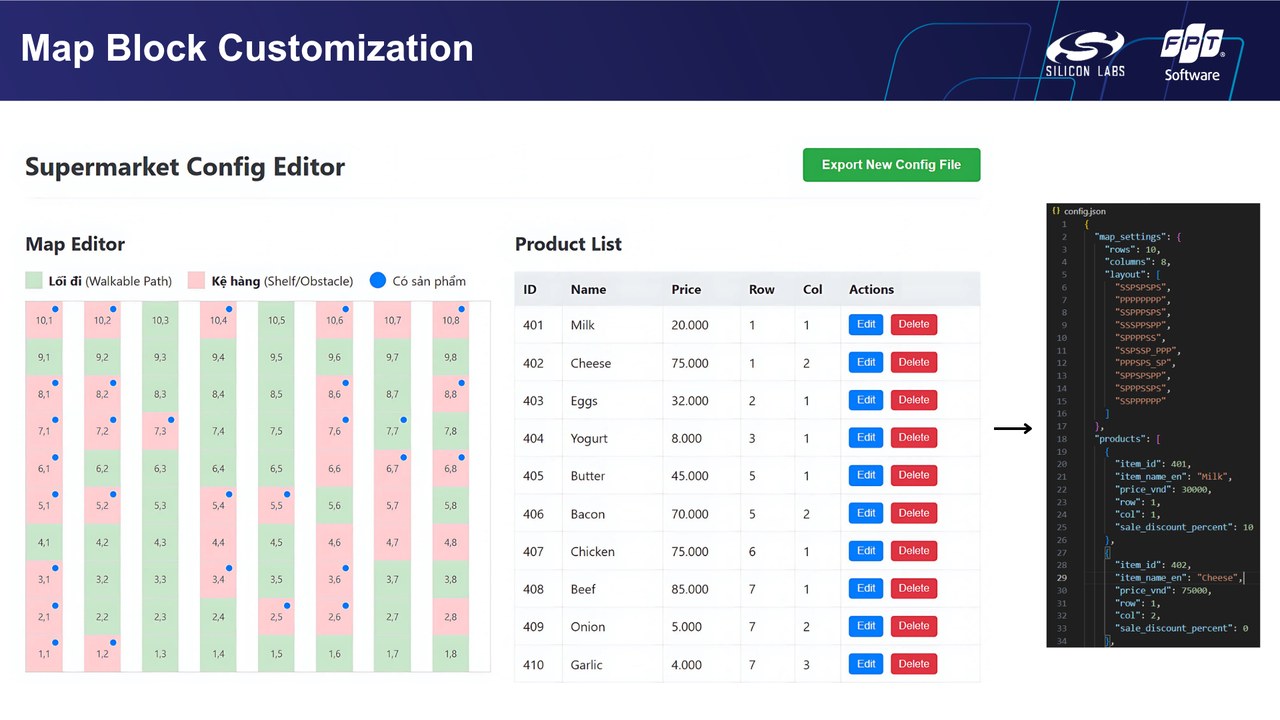
To support rapid rollout across diverse retail branches, the team engineered a visual Supermarket Config Editor:
- Store operators can draw walls, aisles, and checkout zones directly in a web interface.
- Automatically compiles store layouts into graph navigation meshes for A* pathfinding.
- Supports Over-The-Air (OTA) firmware deployment for dynamic beacon calibration.
6. Competitive Advantage & Impact
| Feature | Computer Vision Carts (Amazon Dash) | Retail Mobile Apps | WinCart |
|---|---|---|---|
| Unit Hardware Cost | Extremely High ($5,000+) | Low (BYOD) | Low (~$150/cart) |
| Positioning Accuracy | Visual Odometry (Drift-prone) | Cellular/Wi-Fi (3–5m error) | BLE Triplet Metric Learning (< 1m) |
| User Experience | Heavy, restricted cart design | Small phone screen, battery drain | Dedicated cart touchscreen + Voice AI |
| Edge AI Assistance | Barcode/Vision checkout only | Cloud chatbot (network dependent) | Local LLM (Zero cloud latency) |
| Shelf Infrastructure | None | None | Low-cost battery-operated BLE beacons |
7. Project Credits & Recognition
- Competition: IoT Challenge 2025 (Top 20 Finalist)
- Organizers: FPT Software & Silicon Labs
- Core Contributors: WinCart Engineering Team (VinUniversity)
- Nguyen Hong Phuc (BLE Positioning Architecture, Triplet Network Metric Learning, Edge LLM / Software Integration)